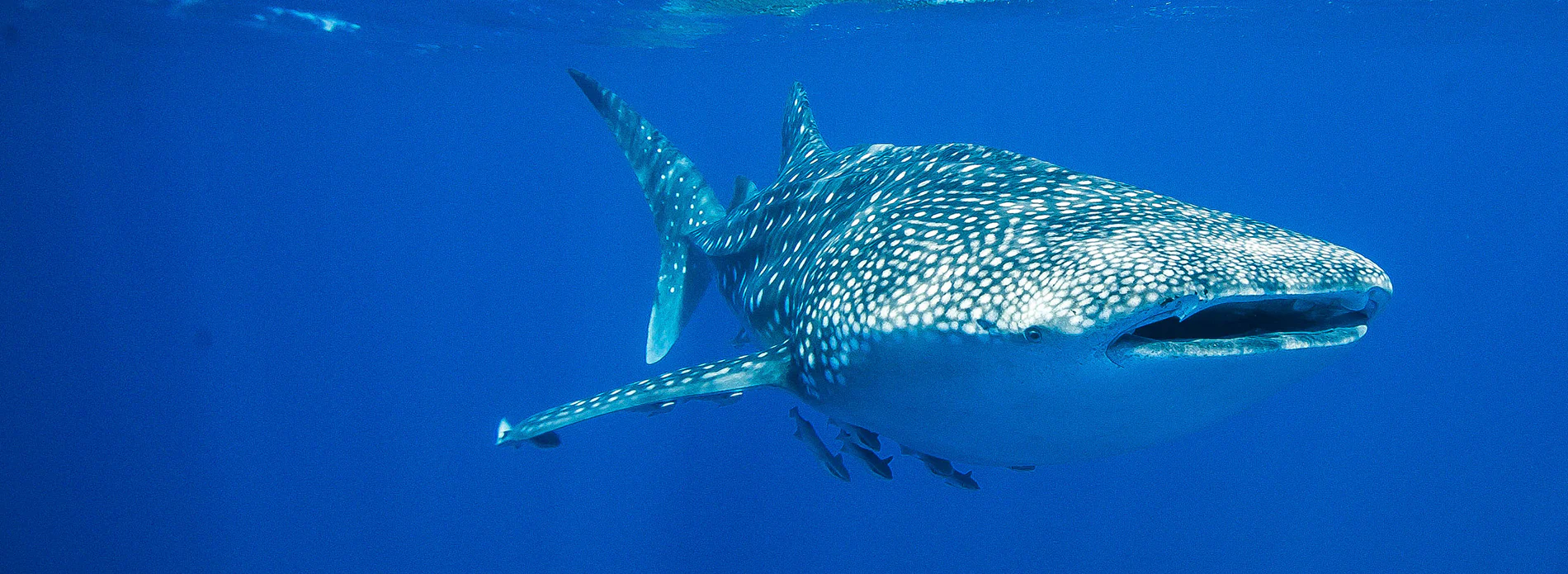
Pulling on my wetsuit and goggles, I snorkeled solo through psychedelic coral formations and shoals of parrot fish. In the wings of their advance were green sea turtles; plodding creatures on land transformed into agile and graceful swimmers in their preferred habitat.
To swim further offshore with the humpback whales, I took a boat run by a local operator with a marine biologist who doubled up as our dive instructor. There in the ocean, I found myself just 50 feet from a mother and calf and felt their size and force as they calmly whooshed by, as if I was being passed by a double-decker bus.
While it’s easy to feel like you’re part of another world out in the water, it is, of course, an integral part of our planet, covering more than two-thirds of its surface. To dive among aquatic wildlife is to be reminded that natural beauty doesn’t end on land, and to be quickly transformed into a marine environmentalist.
Australia’s Great Barrier Reef is already being radically altered by successive record-breaking heatwaves, causing sea temperatures to rise and coral bleaching to occur, whereby once vibrantly colored coral turns white and begins to perish. These remarkable marine gardens may be out of sight, but they should be front of mind if future generations are to appreciate them in all their splendor.
Written by David Prior, Founder and CEO of PRIOR members-only travel club. Discover PRIOR’s tailored itineraries and library of one-off experiences, journeys, events and parties across the globe at www.prior.club.